
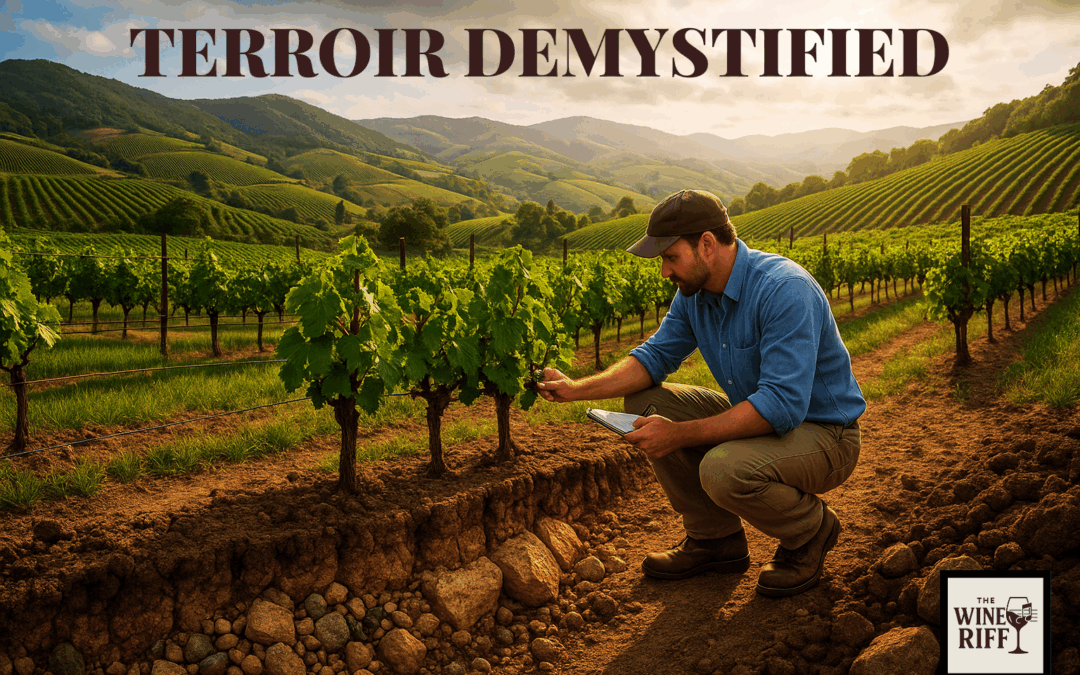
What is Terroir?
How Soil, Climate & Landscape Shape the Taste of Wine
Let’s take a deep dive into wine terroir, as explained, from the ground up.
🌱 What Is Terroir?
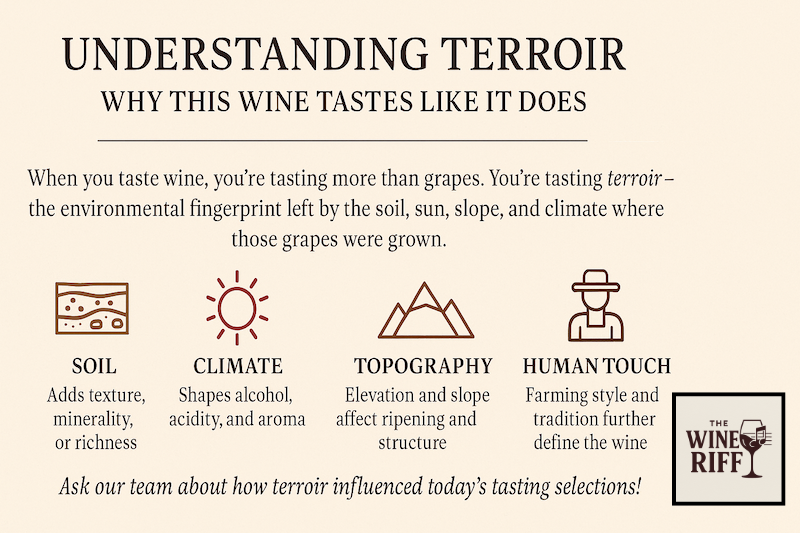
Terroir (pronounced ter-wahr) is a French term that encapsulates the unique combination of soil, climate, topography, and even human vineyard practices that influence how grapes grow and how the resulting wine tastes. In short, terroir is nature’s signature on wine.
It’s why a Chardonnay from Sonoma Coast tastes strikingly different from one grown in Chablis, France. Despite being the same grape, their grape growing conditions are dramatically different.
🔍 Breaking Down the Terroir Triad
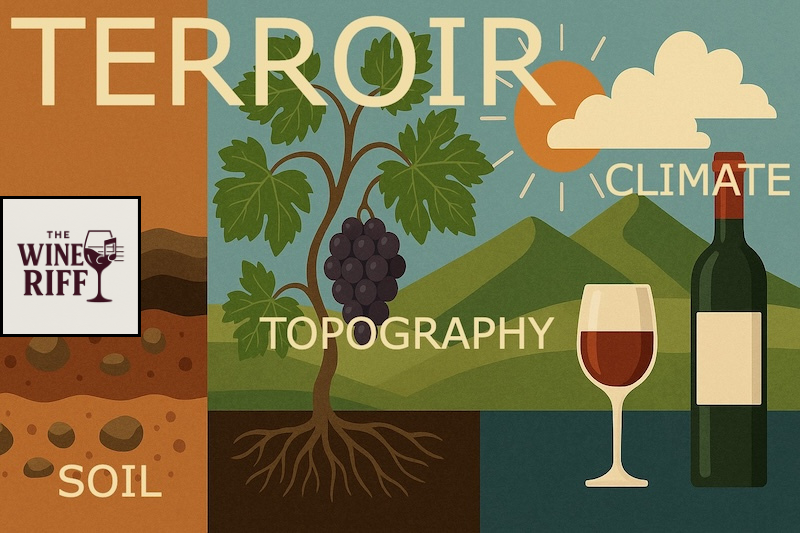
The three major natural components that define terroir are climate, soil, and topography. Here’s how each plays a role in shaping your wine:
🌤️ 1. Climate: The Seasonal Sculptor of Flavor
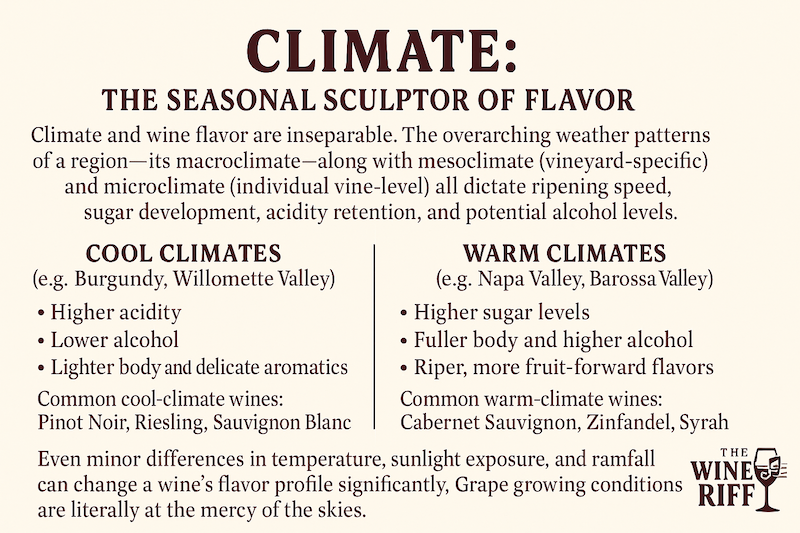
Climate and wine flavor are inseparable. The overarching weather patterns of a region—its macroclimate—along with mesoclimate (vineyard-specific) and microclimate (individual vineyard blocks) all dictate ripening speed, sugar development, acidity retention, and potential alcohol levels.
Cool Climates (e.g., Burgundy, Willamette Valley) slow ripening, yielding wines with:
- Higher acidity
- Lower alcohol
- Lighter body and delicate aromatics
- Common cool-climate wines: Pinot Noir, Gamay, Chardonnay, Riesling, Sauvignon Blanc, Gewürztraminer, Viognier
Warm Climates (e.g., Napa Valley, Barossa Valley) ripen grapes faster, often resulting in:
- Higher sugar levels
- Fuller body and higher alcohol
- Riper, more fruit-forward flavors
- Common warm-climate wines: Cabernet Sauvignon, Zinfandel, Syrah, Malbec, Grenache, Tempranillo
Even minor differences in temperature, sunlight exposure, and rainfall can change a wine’s flavor profile significantly. Grape growing conditions are literally at the mercy of the skies.
Sign up to our Email List to Get Notified of Members’ Specials, New Releases and New Discoveries. Click here to sign up. There is no obligation and you can unsubscribe anytime.
🪨 2. Soil: The Silent Influencer
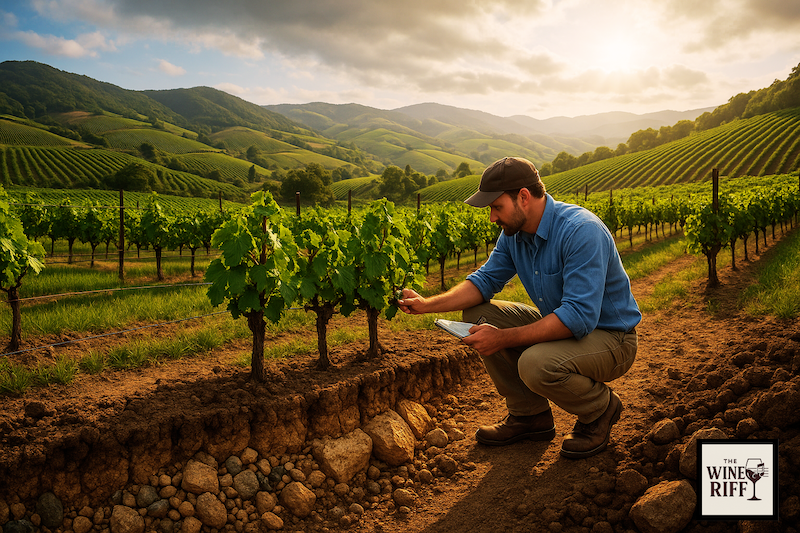
The wine and soil connection runs deep—literally. Vines don’t just take root in any dirt; they thrive in specific types of soil that stress them just enough to produce concentrated fruit, resulting in more structured, complex wines.
Key ways soil affects wine:
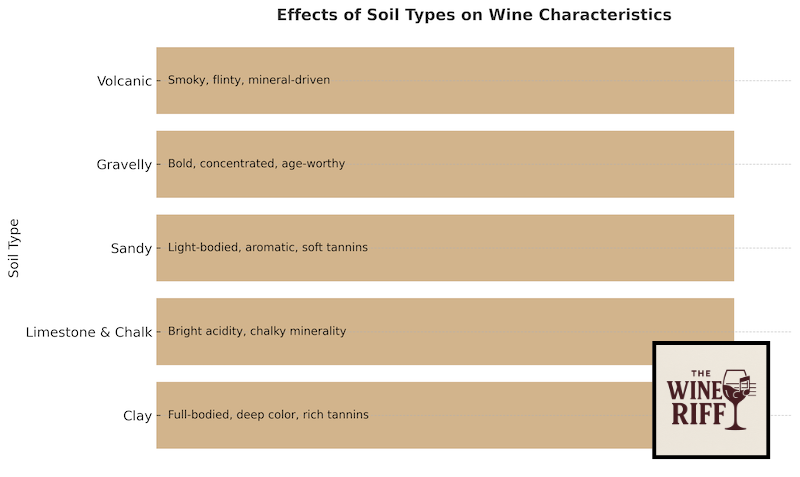
- Drainage & Water Retention: Well-draining soils (such as gravel or sand) lead to smaller berries with thicker skins, resulting in wines with greater concentration and structure.
- Mineral Composition: Soils like limestone and schist can impart subtle mineral flavors or textures (think of the chalky finesse in Chablis or the slatey bite in Mosel Rieslings).
- Heat Retention: Darker soils retain warmth, promoting earlier ripening. Lighter soils reflect heat and light, helping maintain acidity and freshness in the grapes.
Examples:
- Volcanic Soils (Etna, Santorini, Howell Mountain): Earthy, smoky, bold reds and structured whites.
- Limestone Soils (Paso Robles, Burgundy, Champagne): Famous for wines with vivid acidity, tension, and a mineral spine—essential for elegant Chardonnay and Pinot Noir.
- Chalk Soils (Champagne, Loire Valley, Sussex, UK): Light, porous, and excellent at drainage. They lend wines a zesty, linear profile with striking minerality—ideal for sparkling wines and high-acid whites.
- Clay Soils (Bordeaux, France, Ribera del Duero, Spain, parts of Napa Valley): Water-retentive and cool, clay gives rise to powerful, plush wines, often based on Cabernet Sauvignon, Tempranillo, Merlot, Cabernet Franc, and other Bordeaux varietals.
- Sandy (Loam) Soils (Russian River Valley): Predominant soil type is Goldridge soil, a fine, sandy loam derived from the erosion of ancient marine sediments. Ideal for premium Pinot Noir and Chardonnay.
- Gravelly Soils (Left Bank Bordeaux, Napa Valley’s Rutherford Bench): Free-draining and heat-retaining, these soils yield structured, age-worthy reds—think Cabernet Sauvignon with firm tannins and dark fruit.
- Schist & Slate Soils (Mosel, Priorat, Douro): These heat-storing stones produce wines with intensity, sharp minerality, and elegance—perfect for Riesling, Garnacha, and Port varietals.
So, whether it’s the crunch of chalk underfoot in Champagne or the iron-rich gravel beds of Pauillac, the story of the wine always begins in the soil. These earthy influences may be invisible to the eye but are unmistakable in the glass.
The influence of terroir in wine is rooted, quite literally, in the ground beneath the vines.
🏔️ 3. Topography: The Lay of the Land
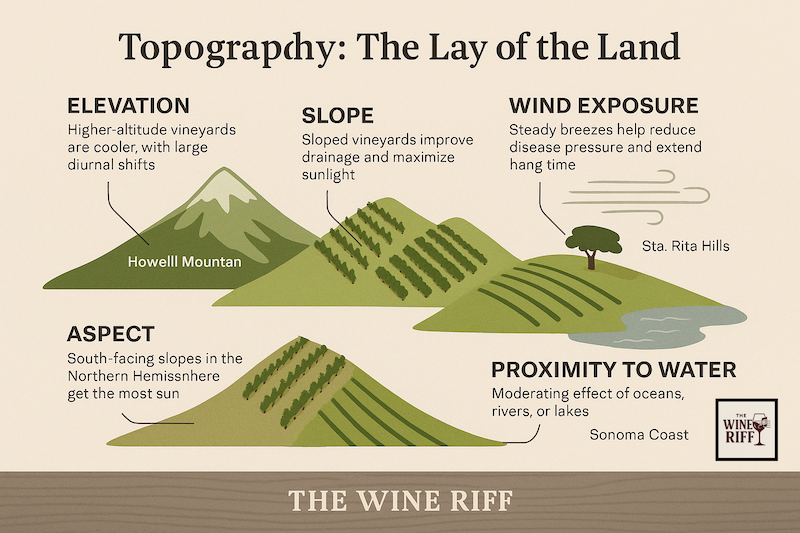
Topography encompasses a vineyard’s elevation, slope, aspect, and now more than ever, its exposure to wind and proximity to water. These natural features shape the vineyard’s microclimate, influencing everything from grape ripening to disease resistance and ultimately, the wine’s personality.
- Elevation: Higher-altitude vineyards are typically cooler and experience greater diurnal temperature shifts (warm days, cool nights). This slows ripening, helping grapes retain acidity and develop layered aromatics. Wines from mountain-grown fruit—think Howell Mountain Cabernet, Elqui Valley Syrah, or Valle d’Aosta Nebbiolo—tend to show firm tannins, bright acidity, and age-worthy tension.
- Slope: Sloped vineyards are prized for their natural drainage and ability to optimize sun exposure, especially in marginal climates. Steeper slopes (like those in the Mosel or Côte-Rôtie) allow grapes to bask in sunlight even during cooler seasons, while also preventing water buildup, which reduces the risk of disease.
- Aspect: A vineyard’s aspect—the direction it faces—can dramatically affect ripening. In the Northern Hemisphere, south-facing slopes receive the most consistent sunlight, which is ideal for achieving full ripeness. In cooler climates like Burgundy or Alto Adige, aspect can be the deciding factor between underripe and perfectly matured fruit.
- Wind Exposure: Wind acts as nature’s air conditioner and protector. In coastal or high-elevation vineyards, steady breezes can reduce humidity, minimizing mildew pressure and allowing for minimal-intervention farming. Wind also slows photosynthesis, which extends hang time—a crucial factor for balanced ripening. Regions like Mistral-swept Southern Rhône, Península de Setúbal, and Carneros (with its Petaluma Gap influence) owe much of their elegance and freshness to constant wind exposure.
- Proximity to Water: Large bodies of water, such as oceans, rivers, or lakes, typically moderate climates. Water absorbs heat during the day and releases it at night, acting as a temperature stabilizer. Coastal and river-influenced vineyards often experience milder growing conditions, resulting in wines that are characterized by elevated freshness and poise. Think of the Loire Valley flanking the Loire River, the Sonoma Coast cooled by the Pacific, or the Lakes of Northern Italy influencing Lugana and Franciacorta.
Whether it’s the sun-drenched slopes of the Douro, the wind-swept ridges of Sta. Rita Hills, or vineyards perched above foggy valleys, topography sculpts the landscape—and the wine—one contour at a time. Let the land speak, and the glass will echo its story.
🍷 Terroir in the Glass
When we discuss how terroir influences wine, we’re referring to the entire sensory experience. It’s what gives Sancerre its flinty zing, Brunello its firm structure, and Oregon Pinot its forest-floor earthiness. Wine tasting and terroir are deeply intertwined—understanding one enhances the other.
Some of the world’s most sought-after bottles are those that distinctly express their origin—wines with a sense of place, not just a grape variety label.
Sign up to our Email List to Get Notified of Members’ Specials, New Releases and New Discoveries. Click here to sign up. There is no obligation and you can unsubscribe anytime.
🧭 Why Terroir Matters
Understanding terroir helps you:
- Choose wines you’re more likely to enjoy based on the growing region
- Appreciate how climate, soil, and elevation impact wine
- Make informed decisions when exploring new varietals or styles
- From Napa and Sonoma Valleys to Burgundy, Argentina, and beyond, terroir’s influence in wine bridges the vineyard and your glass. It’s the reason winemakers speak about their sites with reverence and why sommeliers champion regional distinctions.
Final Sip: Celebrate the Story in Every Bottle
Wine is so much more than taste—it’s terrain, toil, and time. As you explore the world of wine, let terroir be your compass. Whether you’re sipping a breezy Albariño from Rías Baixas or a robust Syrah from the slopes of Hermitage, you’re not just drinking a beverage—you’re experiencing a place.
So raise your glass to the magic of terroir—it’s the heartbeat of every memorable wine.
NOTE: All wines offered for sale on this website are sold through our affiliate and fulfillment partner, Wine Country Connection.
WARNING: Drinking distilled spirits, beer, coolers, wine and other alcoholic beverages may increase cancer risk, and, during pregnancy, can cause birth defects. For more information go to www.P65Warnings.ca.gov/alcohol.